
Doctoral College

Presentation
Considering that, within the scope of their mission, universities must promote postgraduate training and contribute to the production and dissemination of scientific knowledge, as well as ensure that the knowledge produced leads to socially relevant innovation, the Doctoral College of the University of Algarve, in conjunction with the Organic Units and the Research and Development Units, has the mission of guaranteeing and promoting the quality of student training and the guidance provided by the 3rd cycle faculty of UAlg.
It also aims to contribute to the excellence and regional, national and international recognition of the doctoral training offered by UAlg, in order to provide an integrated response to the different Doctoral Programs, so as to guarantee their quality, promote interdisciplinarity and internationalization, as well as the pursuit of the United Nations Sustainable Development Goals.
Furthermore, the aim is to enhance the existing Doctoral Programs at UAlg by jointly offering students transversal training, not only in the scientific and technical fields, but also in the acquisition of transversal skills in the personal, social and professional domains, which will be transferable both to the ongoing doctoral process and to innovative professional activity in the post-doctoral period.
The Doctoral College of UAlg was created in 2020, through Order RT.50/2020, 28-05-2020, with its first Regulations published through Order RT.125/2020, 6-11-2020, which was amended by Order RT.90/2026, published in the Official Gazette, 2nd Series, on 25-06-2026.
Saúl Neves de Jesus, Pro-Rector for the Doctoral College
Faculty of Human and Social Sciences
Undergraduate Degree: Psychology (1989)
Doctorate: Educational Sciences, specializing in Educational Psychology (1997)
Habilitation: Psychology (2001)
Professional Category: Full Professor of Psychology (since 2003)
In his academic background, he also completed postgraduate studies in Human Resources Management, and three postdoctoral fellowships, two in Psychology and one in Visual Arts.
He was Professor at the University of Coimbra and, since 1997, has been a Professor at the University of Algarve.
He is the Director of the Doctoral Program in Psychology and was the first Director of the Undergraduate Program in Psychology and director of several master's programs in Psychology.
He was Vice-Rector for Education and Culture (2017-21) and Diretor, President of the Scientific Council and President of the Pedagogical Council of FCHS, as well as Director of the Department of Psychology and Educational Sciences.
He is the Coordinator of the University Research Center in Psychology (CUIP), having previously been the Coordinator of CIEO.
It has over a hundred articles indexed in Scopus and these impact on most of the SDGs of the 2030 Agenda, namely goals 4, "Quality Education", 7, "Quality Health", and 16, "Peace, justice and effective institutions".
He has supervised postdoctoral researchers from various countries and has already supervised more than fifty completed doctoral theses.
He was Coordinator of the Psychology Panel for the granting of doctoral and postdoctoral scholarships from the FCT and has been President of several CAEs of A3ES.
He is the representative of Portugal in the "Stress, Trauma, Anxiety and Resilience Society" and was Coordinator of the National Psychology Forum.
He has received some international awards and distinctions (“Luso-Brazilian Prize for Research in Health Psychology-2009”; “Atlas Elsevier Prize-2018”; “STAR Lifetime Career Award-2023”), national awards and distinctions (“Rui Grácio Prize-1996”; “OPP Career Award-2019”; “APP Career Award for Research in Psychology-2019”) and regional awards and distinctions (“Medal of Merit of the City of Olhão-1998”; “Personality of the Year – Education, AIRA 1998”; “Medal of Merit of the City of Faro-2024”).
He was a founding member of the Portuguese Laboratory for Healthy Work Environments (LabPats) and President of the jury for the “Healthy Workplaces Award 2024”, promoted by the OPP, in partnership with ACT and EU-OSHA (European Agency for Safety and Health at Work).
According to Article 7 of the Regulations, the Scientific Committee has the following composition:
. The Director;
. The Directors of the Doctoral Programs at UAlg;
. The Coordinators of the R&D Units at UAlg;
. Student representatives from the doctoral networks of the R&D Units and/or Doctoral Programs at UAlg;
. Representatives of other members of the academic community whose participation is considered relevant.
Upon proposal by the Director, working groups may be created within the Scientific Committee dedicated to specific aspects of the Doctoral College's activities.
Relevant initiatives and news in 2026
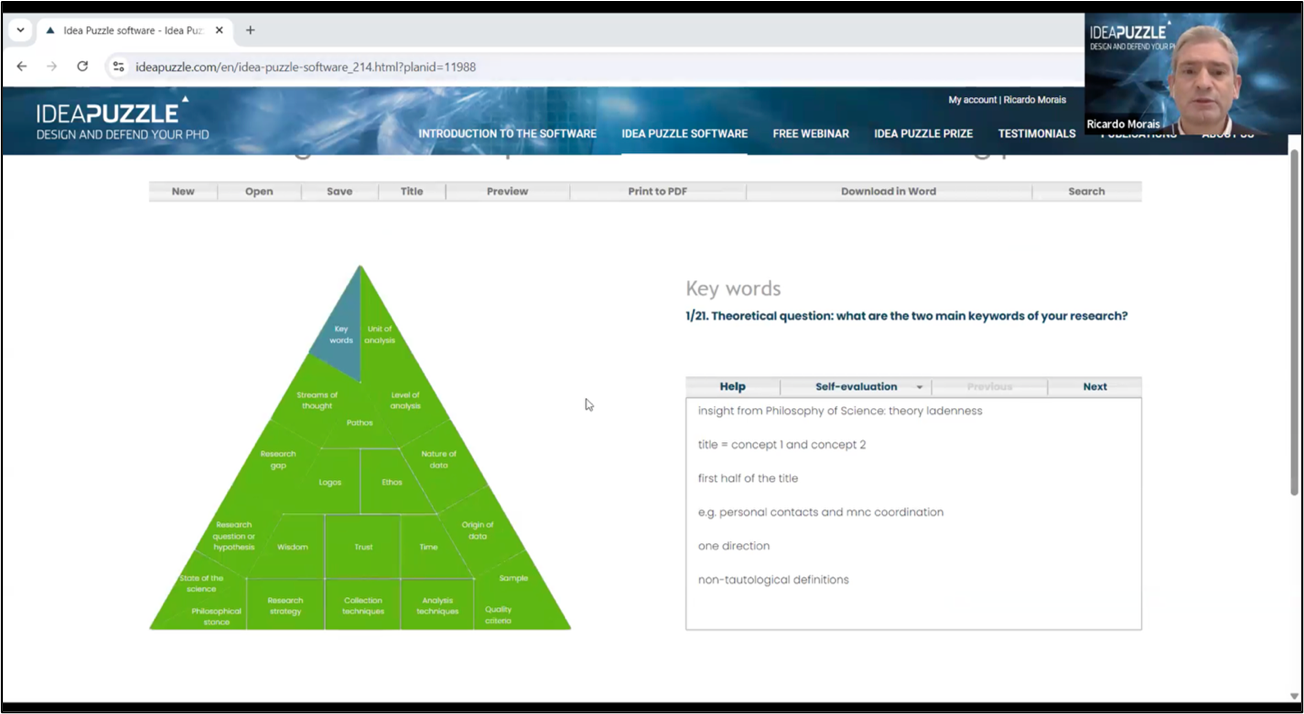
On March 5th, was held the webinar “Philosophy of science and research design with Idea Puzzle”, by Ricardo Morais. 130 doctoral students and other researchers from UAlg were registered.
This webinar explains the steps of a model for developing research skills that can be used to prepare a doctoral thesis, a research project, or to write a scientific article.
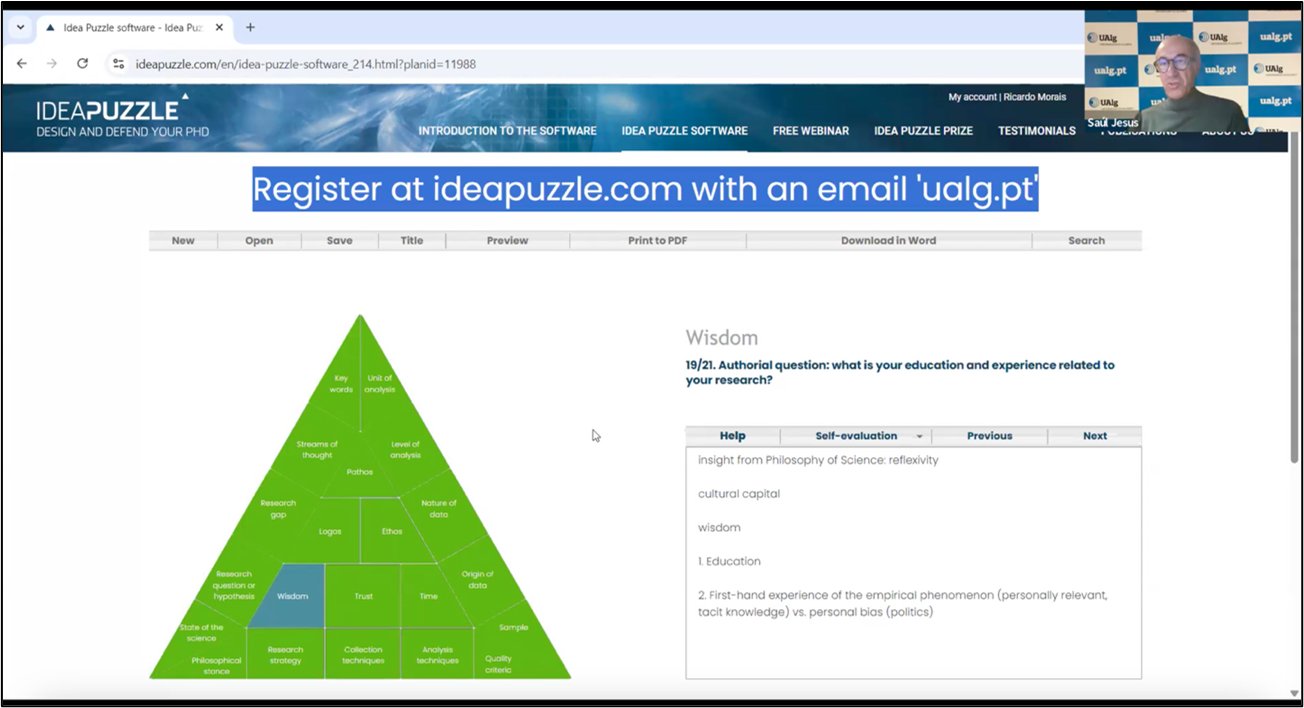
Meanwhile, the University of Algarve has partnered with the platform created by Ricardo Morais, allowing any individual registration at “www.ideapuzzle.com” where the email ends in ‘ualg.pt’ to have free access to the Idea Puzzle software.
The Idea Puzzle model can be viewed at the following link.
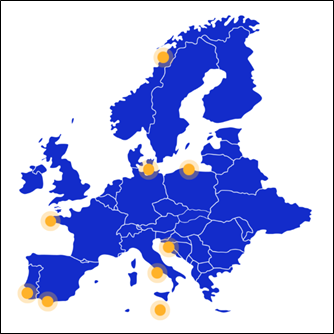
The FCT (Portuguese Foundation for Science and Technology) awarded 20 doctoral scholarships to the University of Algarve, seeking to encourage joint doctoral programs between UAlg and the other eight universities of the European University Alliance to which UAlg belongs.
According to the ranking of candidates based on their scores, 6 scholarships were awarded for Doctoral Programs at the Faculty of Science and Technology, 5 scholarships for Doctoral Programs at the Faculty of Economics, 6 scholarships for Doctoral Programs at the Faculty of Human and Social Sciences, and 3 scholarships for Doctoral Programs at the Faculty of Medicine and Biomedical Sciences. This distribution of scholarships by UAlg Faculties was previously defined, based on the number of doctoral students in each Faculty's doctoral programs.
The work plan should take place mostly at the University of Algarve, but allows for joint supervision with SEA-EU partner universities (mixed scholarships). The work periods at other SEA-EU partner universities have a minimum duration of 6 months and a maximum of 24 months. The 20 scholarships were awarded to students from 11 doctoral programs at UAlg and involve external supervisors from all universities that are part of the European Sea Alliance, with the exception of the University of Brest (France). Thus, researchers from other universities in the SEA-EU European Sea Alliance are involved in these students' doctoral projects: University of Cadiz (Spain), University of Kiel (Germany), University of Gdansk (Poland), University of Split (Croatia), University of Malta (Malta), University of Naples (Italy), and NORD University (Norway).
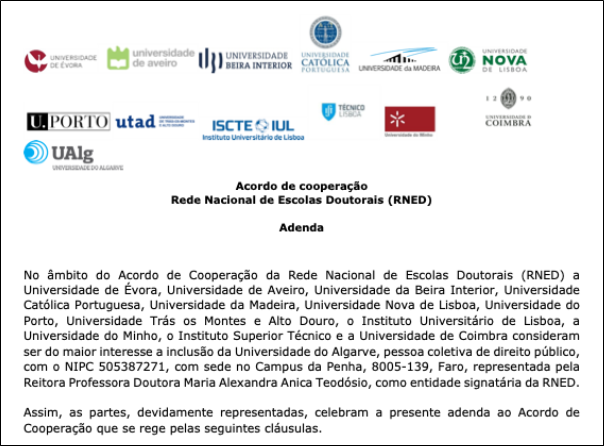
The Rector of the University of Algarve, Professor Alexandra Teodósio, signed the addendum to the Cooperation Agreement of the National Network of Doctoral Schools (RnED) on April 1st, making UAlg a part of this Network, which already includes the University of Évora, the University of Aveiro, the University of Beira Interior, the Catholic University of Portugal, the University of Madeira, the Nova University of Lisbon, the University of Porto, the University of Trás-os-Montes and Alto Douro, the ISCTE-University Institute of Lisbon, the University of Minho, the Instituto Superior Técnico, and the University of Coimbra.
The initial Agreement that allowed the creation of RnED was signed in 2017.
Clause 1 of the Agreement explicitly states that the intention is institutional collaboration between the signatory entities and the "establishment of a cooperation structure between the respective Doctoral Schools".
The FCT-CEMAR Competition allows for the awarding of PhD research grants, funded by the FCT. It is a Consortium of Marine Science Schools, which includes seven Higher Education Institutions (University of Algarve, University of Aveiro, University of Madeira, University of the Azores, University of Évora, NOVA University of Lisbon and Polytechnic Institute of Leiria), coordinated by UAlg.
This competition is open to students from Timor-Leste and Portuguese-speaking African countries, with 20 grants awarded per year.
In the 4th edition of this competition, UAlg secured 6 grants for PhDs related to Marine Sciences. Across the four editions of this competition, UAlg has already secured 28 of the 80 grants awarded to date.
For the 5th edition (2026-27), the application period is scheduled to be between September and December 2026.
More information here.
Within the framework of the Tordesillas Group, which includes Portuguese, Spanish and Brazilian universities aiming at cooperation between them in terms of doctoral programs, a call for the creation of new Tordesillas Doctoral Colleges was opened until April 30, 2026.
For the first time, the University of Algarve submitted a proposal to create a Doctoral College. It was a doctorate in Tourism Sciences, and this initiative was led by the Research Center for Tourism, Sustainability and Well-being (CinTurs), which involved the universities of São Paulo (Brazil) and Málaga (Spain),
More information here.
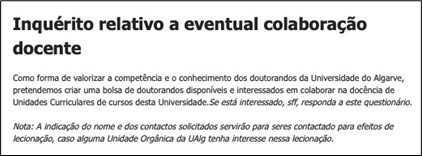
As one of the strategic objectives of the UAlg Rector's Action Plan, actions were developed to allow doctoral students to participate in teaching courses at UAlg.
The process began with an email sent to UAlg doctoral students seeking to assess their availability and interest. Those interested were asked to answer a questionnaire that allowed the characterization of doctoral students in relation to various aspects considered relevant in this context.
82 doctoral students responded to the questionnaire, revealing a high level of interest in participating in this initiative.
The summary table with information relating to doctoral students was shared with the eight Organic Units of UAlg, and all of which selected doctoral students to collaborate in teaching curricular units of their courses, with a participation of 45 doctoral students planned for the 2026-27 academic year.
The 3MT-UAlg Competition aims to contribute to stimulating science communication and interdisciplinarity skills in UAlg doctoral students, as well as a greater connection to society regarding the research carried out at UAlg.
In the first stage, doctoral students must present a slide and a video of less than 3 minutes, allowing the selection of the finalists for this competition.
As a way to contribute to better preparation of the finalist doctoral students for the final of the Competition, to be held on May 9th, the workshop "Communicating science in 3 minutes" was held on April 22nd, by Laura Alves, Coordinator of the Communication Office of UAlg.
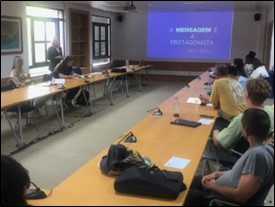
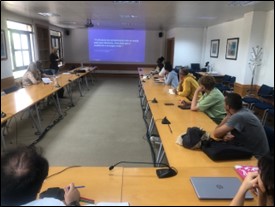
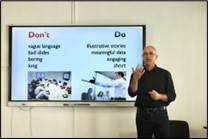
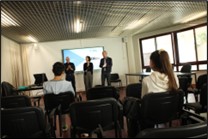
In line with other initiatives carried out by the Doctoral College aimed at developing scientific communication skills among doctoral students, on May 5th the workshop “How to present your research without losing your audience?” was held by Prof. Dr. Jaime Anibal, from ISE-UAlg.
This initiative was organized in collaboration with the Doctoral Student Network of CUIP (University Research Center in Psychology), with the participation of several dozen doctoral students from various courses at UAlg, both in person and remotely.
More information here.
More information here.
Pro-Rector of the Doctoral College, Prof. Dr. Saúl Neves de Jesus, has participated in several RnED meetings, such as the meeting held remotely on March 17.
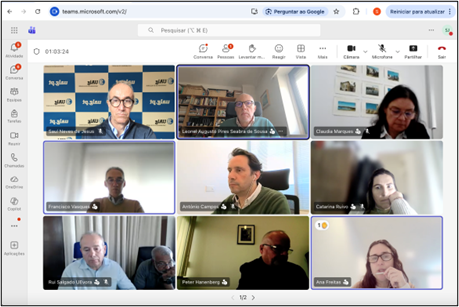
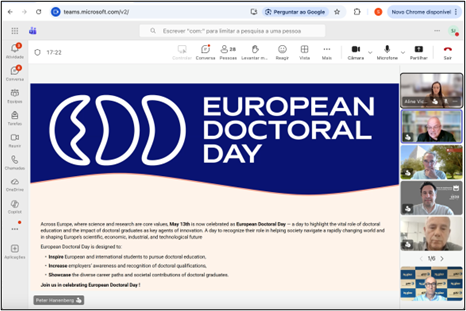
One of the objectives of this meeting was to organize RnED's participation in the European Doctoral Day. Thus, on May 12, RnED organized a symposium, open to doctoral students from various universities, featuring the following presentations:
. “Doctoral Education in Europe and beyond”, by Peter Hanenberg, from the Catholic University of Portugal and Chair of EUA-CDE (Council for Doctoral Education of the European University Association);
. “Transversal skills in Doctoral training”, by Francisco Vasques, from the University of Porto;
. “Doctoral training beyond academia”, by Gil Andrade-Campos, from the University of Aveiro.
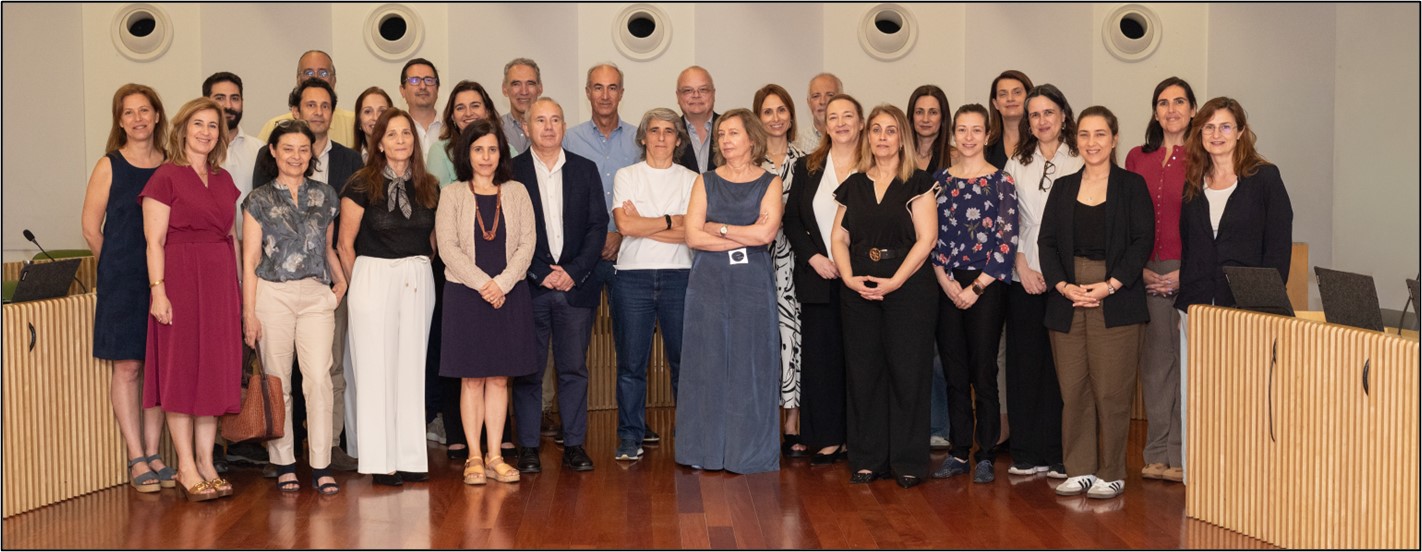
On June 12, a meeting of RnED took place at the Nova University of Lisbon, which was also attended, as guests, by representatives of A3ES, allowing for the clarification of specificities that should be taken into account in the evaluation of doctoral courses by the CAE of A3ES.
From this meeting, RnED prepared a Position Statement on "Doctoral Education in Portugal: principles for a quality scientific policy in a context of transition", which was sent to several entities, namely A3ES and the Ministry of Education, Science and Innovation (MECI).
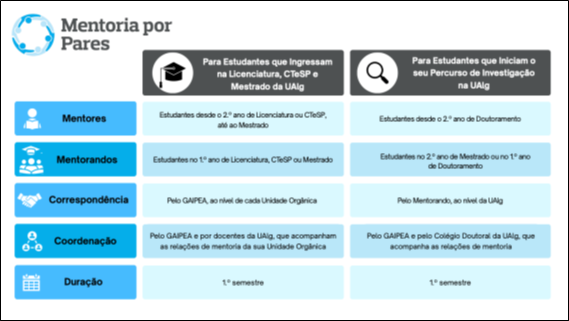
The Peer Mentoring Program has been in place at the University of Algarve since 2021, and was even awarded the UAlg Good Practices Prize in 2023. Hundreds of UAlg students have already participated in this Program, both as mentors and mentees, with advantages for participating students in terms of integration into UAlg and their course of study, development of soft skills, and academic success.
Some doctoral students have participated in this Program, but still in small numbers. To increase the participation of doctoral students, the Program has been adapted for students who are beginning their research career at UAlg, namely doctoral students.
The Doctoral College of the University of Algarve was created through Rectoral Order RT.50/2020, of May 18, 2020, with its Regulations presented in Order RT.125/2020, of November 6, 2020.
After more than five years in effect, it became necessary to update the Regulations, seeking to address the difficulties that arose during its application and the new objectives defined for the Doctoral College.
In this sense, the 1st amendment to the Regulations of the Doctoral College was made, which was published in the Official Gazette on June 25 (DR No. 121/2026, Series II, of 06-25-2026), with one of the main novelties being the creation of the Scientific Committee.
Article 7 of the Regulations explicitly states that the Scientific Committee is composed of the Director of the Doctoral College, the Directors of the Doctoral Programs at UAlg, the Coordinators of the R&D Units at UAlg, the students representatives of the doctoral student networks of the R&D Units and/or Doctoral Programs at UAlg, and also representatives of other members of the academic community whose participation is considered relevant.
In this way, the aim is to enhance the existing Doctoral Programs at UAlg by jointly offering students a cross-disciplinary education, not only in the scientific and technical fields, but also in the acquisition of transversal skills in the personal, social and professional fields.
Many doctoral students do not complete their doctorates, reflecting a high dropout rate at the 3rd cycle level.
In order to understand the main factors contributing to this situation, the Doctoral College conducted a study, surveying doctoral students who did not renew their enrollment in the 2025-26 academic year.
Of the 86 doctoral students surveyed, 23 (26.7%) responded to the questionnaire prepared for this purpose.
Among the results obtained, it is noteworthy that the vast majority were in their 1st or 3rd year of the course, revealing that dropout occurs either at the beginning or in the final phase of doctoral research, and that a large proportion worked while pursuing their doctorate, revealing the difficulty in reconciling academic life with professional life.
The responses regarding the reasons for non-renewal of enrollment reveal that "incompatibility with professional activity" is the main reason for non-renewal by doctoral students, followed by "financial problems" and "not obtaining a scholarship from FCT or another entity". Although it may be difficult to find solutions for these factors, there are others that have also proven important and whose resolution depends more on the supervision process of doctoral students, namely "difficulty in obtaining a sample for the empirical study" and "lack of a research environment".

The fees and charges at the University of Algarve have recently been changed and are published in the Official Gazette, 2nd series, No. 112, of June 12.
Among the changes made, the most notable is the halving of the application fee for doctoral examinations, which will now cost €300.
In this way, UAlg aims to encourage doctoral students to complete and publicly present their doctoral theses.
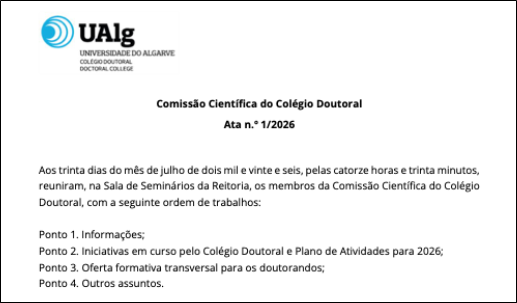
With the publication of the amendment to the Doctoral College's Regulations, which created the Scientific Committee, the first meeting of this body was held on July 30.
This Committee includes 41 members, namely the Directors of the Doctoral Programs at UAlg and the Coordinators of the R&D Units, seeking a greater connection between doctoral studies and the research work developed within the R&D Units.
The vast majority of the members of this Committee participate in this meeting, and the main initiatives underway by the Doctoral College were presented, as well as the cross-disciplinary training offered to doctoral students was analyzed. In addition, the Doctoral College's Activity Plan for 2026 was approved.
The United Nations adopted the Sustainable Development Goals (SDGs) on September 25th, 2015, making this day known as World Sustainability Day.
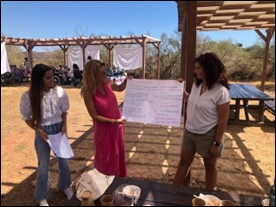
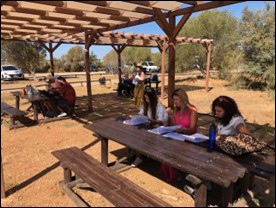
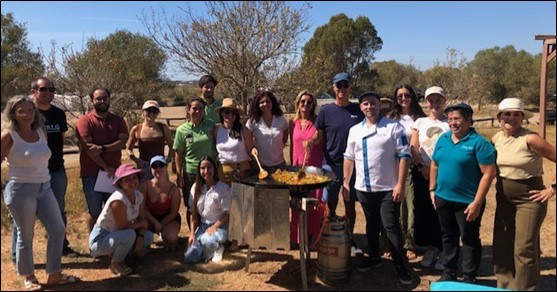
To highlight the importance given to sustainability issues and to contribute to a stronger connection between UAlg PhD programs and the municipalities of the Algarve region, a visit to the Castro Marim and Vila Real de Santo António Salt Marsh Nature Reserve was held on September 24th, in an initiative called “UAlg PhD Sustainability Day”, organized by Pro-Rectors Saúl de Jesus and Vânia Serrão.
In the Reserve, several outdoor activities were carried out, including an exercise with groups of PhD students from different courses focused on developing research projects aimed at contributing to sustainable development. The projects were shared, resulting in very interesting interdisciplinary ideas, in which the contribution of all doctoral students from each group was integrated.
The visit ended with a Vegetarian Paella cooked on site, followed by an outdoor mindfulness session.
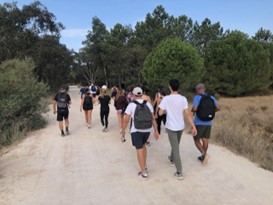
The week that took place between September 23rd and 30th marks the “European Week of Sport”. Seeking to highlight the importance of physical activity and contribute to the integration of UAlg PhD students, the “UAlg PhD #BeActive” initiative was carried out, under the responsibility of the Pro-Rectors Saúl de Jesus and Elsa Pereira.
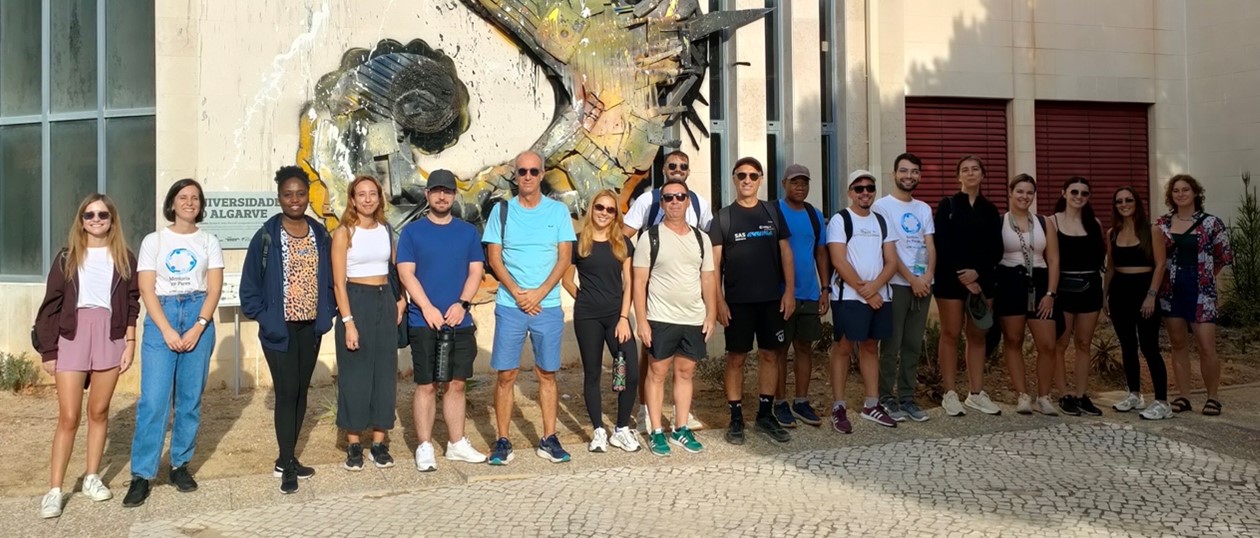
The PhD students took a walk of about 7 km, led by Nuno Rodrigues, responsible for the Sports area of SAS-UAlg, between the Seahorse sculpture by Bordalo II, on the Gambelas Campus, and the equivalent sculpture on Faro Beach.
At the beginning of the walk, the UAlg Peer Mentoring Program was also presented by Mariana Guerreiro, seeking to encourage PhD students to participate in this Program.
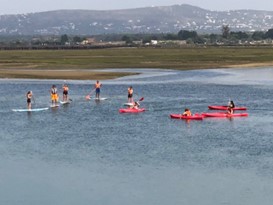
With the collaboration of the Nautical Center, nautical sports, namely canoeing and SUP, were carried out on Faro Beach by some of the PhD students.
The University of Algarve (UAlg) is committed to contributing to sustainable development, and this should also happen through research conducted in doctoral programs.
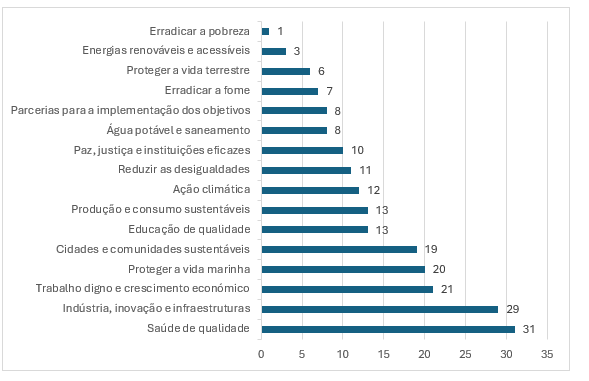
In order to assess the impact on the SDGs of the research carried out by doctoral students, a questionnaire was conducted during the month of September.
Responses were obtained from 118 doctoral students, representing about a quarter of the doctoral students at UAlg, which reveals good participation in the initiative, with 104 responses obtained in the questionnaire in portuguese and 14 in the questionnaire in english.
Responses were received from students from various years of study and from all PhD courses at UAlg, with particular emphasis on the courses with the most students, namely Economics and Business Sciences, Earth, Sea and Environmental Sciences, Psychology, Biomedical Sciences and Tourism.
It is observed that the vast majority of doctoral students consider that their doctoral research work is related to the SDGs. Regarding the SDGs on which the research has or may have the greatest impact, the following stand out: SDGs 3 (“good health and well-being”), 9 (“industry, innovation and infrastructure”), 8 (“decent work and economic growth”), 14 (“protect marine life”), and 11 (“sustainable cities and communities”). Those with less impact are SDGs 5 (“gender equality”) and 1 (“no poverty”).
More information here.
Transversal Courses
Cross-disciplinary courses, especially on scientific writing, scientific communication, and entrepreneurship, to be offered to students from different Doctoral Programs, either in person or remotely.
These courses may be considered for credit towards elective curricular units in doctoral programs.
Course on ‘Philosophy of Science and Research Design’ (EN)
The “Idea Puzzle” software aims to help doctoral students and researchers improve the coherence of a research proposal, article, or thesis in light of the philosophy of science.
Although primarily aimed at doctoral students, it could be useful for all researchers and doctoral thesis supervisors.
Registration can be done by registering at www.ideapuzzle.com with an email ending in “ualg.pt” (see here).
UAlg Peer Mentoring Program for PhD Students (PT/EN)
The UAlg Peer Mentoring Program has been implemented since 2021, with the goal of promoting the integration, well-being, and academic success of UAlg students.
From 2026 onwards, the Program will include a new mentoring model, designed to meet the specific needs of advanced training and scientific research. In this new model, students from the 2nd year of PhD (Mentors) will mentor one to four students from the 2nd year of Master's and the 1st year of PhD (Mentees) throughout the 1st semester - academic stages in which the research component assumes greater relevance.
How it works:
The PhD Mentors will play a key role in helping mentees adapt to the demands of research, manage their academic path, and better integrate into the scientific and institutional dynamics of UAlg. They will have access to the Program's e-learning training, aimed at developing transversal skills beneficial for mentoring and for their personal, academic, and professional development.
In this new format, Mentees will select their preferred Mentors from a list of profiles, provided by email after registration. This approach aims to recognize the diversity of interests, needs, and objectives of students in research paths.
At the end of each mentoring cycle, and after completing the Program evaluation questionnaire, the Mentors' participation will be recorded in the diploma supplement, and the Mentees will receive a certificate of participation.
For more information, please consult the Program flyer (available in the "Documents" section) and the Program's official website at https://www.ualg.pt/mentoria-por-pares
Course on Scientific Communication Skills (EN)
(“Presentation Skills Video Series”)
A set of videos, recorded at UAlg, seeking to respond to a challenge launched by the UAlg Doctoral College and SEA-EU, with funding from the SAPIEN Project, in order to synthesize concepts and tips related to science communication by researchers, namely doctoral students.
These videos are available online and can be used in an asynchronous training strategy.
The video titles are as follows:
“Why should we care?” (9’50)
“Basic Slide Design” (5’40)
“3-Point Classification” (8’10)
“D-Day” (8’50)
Postgraduate course in Methodologies and Techniques in Research Projects (PT/EN)
Flexible and personalized postgraduate course aimed at research scholarship students. The training plan to be implemented by the supervisor consists of a multidisciplinary approach to introducing the research process through practical activity in a UAlg R&D Unit.
(see here)
Cross-disciplinary Skills Courses SEA-EU (EN)
Online courses prepared within the framework of the European University of the Seas (SEA-EU), a European Alliance that integrates nine universities, including UAlg, aimed at developing cross-disciplinary skills in doctoral students from the universities that are part of the Alliance.
Initially, these courses were mainly focused on marine sciences, but new courses have been created, covering an increasingly broad range of cross-disciplinary domains.
The courses are organized for each academic year, are scheduled, and require prior registration by doctoral students.
(see here)
BlueRoute Cross-Cutting Training Modules (EN)
Training modules for doctoral students, created with the aim of strengthening Cross-Cutting skills, particularly in the areas of sustainability, entrepreneurship and the blue economy.
These videos are available online and can be used in an asynchronous training strategy.
(see here)
Online Courses - Modules
1- Entrepreneurship
2- Blue Economy
3- Sustainable Fisheries I, II, III
4- Sustainable and Smart Aquaculture
5- GIS applications in Marine Science: Introduction
6- Exploring Online Ocean Data and Resources
8 - Traceability of Marine Resources
Training sessions offered by the UAlg Library (PT/EN)
Training sessions organized by the UAlg Library on various topics relevant to researchers, particularly doctoral students. Topics covered include the use of bibliographic databases such as Web of Science or Scopus, plagiarism detection, and bibliographic reference management.
These sessions are organized throughout the academic year, with set schedules, and registration is required.
(see here).

